


In the glittering world of Swinging London, amid screaming fans and chart-topping hits, Mick Jagger faced an unimaginable tragedy few knew about. Corrina Jagger, his daughter with Marianne Faithfull, never took her first breath.
This heartbreaking stillbirth 1968 forever altered both parents’ lives, leaving scars that influenced music, relationships, and mental health for decades. Behind rock stardom and celebrity life vs private life, a profound grief and loss story unfolded quietly.
Meet Corrina Jagger: Daughter Of Mick Jagger
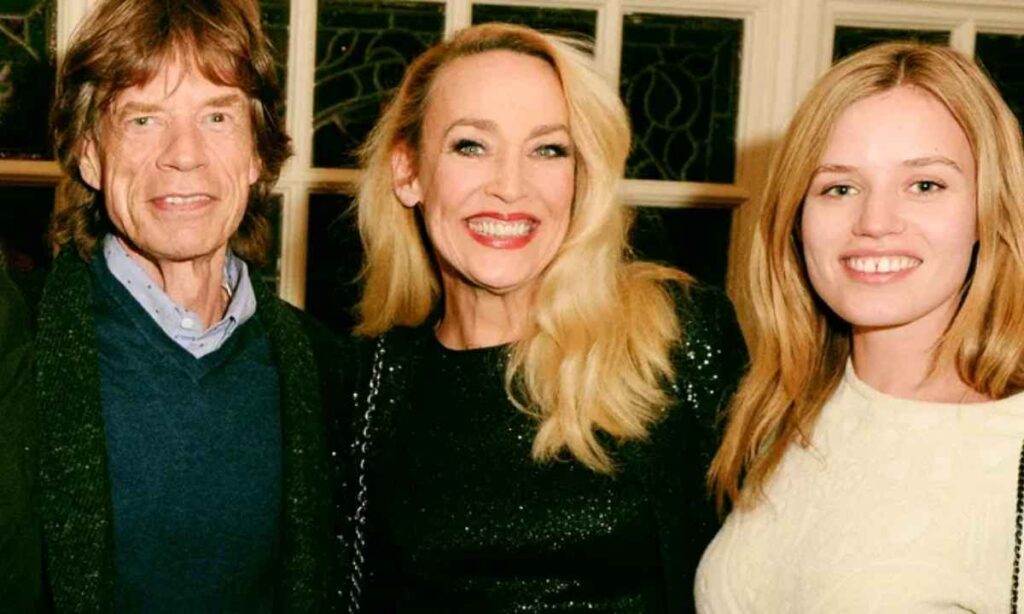
Corrina Jagger represents one of rock history’s most poignant untold stories, a child who never lived yet left an indelible mark on her famous parents. Born into the height of 1960s counterculture and Rolling Stones fame, her brief existence ended tragically.
The daughter of Mick Jagger and Marianne Faithfull became a symbol of celebrity personal tragedy that contrasted sharply with the era’s hedonistic celebration. Her loss highlighted the profound emotional trauma hidden beneath glamorous surfaces, reminding us that fame offers no protection from life’s cruelest moments.
1. Unique Personal Identity
Corrina Jagger’s identity remains forever frozen in potential, a daughter who existed only as hope and heartbreak. Her name carries the weight of parental dreams shattered in November 1968, during an era when stillbirth was rarely discussed publicly.
Read Also This: Clay Travis Net Worth : How He Built $25 Million Empire
2. Jagger Family Relations
Within the sprawling Jagger family tree, Corrina occupies a unique, sorrowful position. She would have been the eldest child of Mick Jagger and Marianne Faithfull, predating his other children including Karis Hunt Jagger, Jade Jagger, and Elizabeth Jagger.
3. Public Profile Perception
The public perception vs private experience surrounding Corrina’s death remained largely hidden for years. Celebrity grief was considered too personal, too painful to share with tabloid-hungry audiences obsessed with the glamorous aspects of rock stardom alone.
4. Cultural Era Relevance
Corrina’s tragic story unfolded during the cultural upheaval of the late 1960s, when society was experiencing revolutionary changes. The 1960s counterculture celebrated freedom and rebellion, yet mental health struggles and child mortality remained taboo subjects, even among celebrities.
5. Biographical Journey Elements
Her biographical narrative analysis reveals how one brief life profoundly influenced two artistic careers. The emotional legacy within families extended beyond immediate parental loss and impact, shaping creative output and personal relationships for decades, demonstrating tragedy’s lasting ripples.
The Parents: A Swinging London Fairytale
Mick Jagger and Marianne Faithfull embodied Swinging London’s intoxicating spirit, beautiful, talented, and seemingly invincible. Their romance captivated the world, representing the era’s romantic idealism and artistic collaboration during the Rolling Stones’ meteoric rise.
Their relationship began in 1966 at a party, igniting a passionate connection that fueled creativity and controversy. Both were at career peaks, navigating fame vs private life tension while the world watched their every move, expecting fairy-tale perfection from two imperfect humans.
Read Also This: Is Duane Ollinger Married? Shocking Truth Revealed
Mick Jagger: The Rolling Stone
Mick Jagger, frontman of the legendary Rolling Stones, had conquered the music world by his mid-twenties. His electrifying performances and rebellious image defined rock stardom, yet beneath the swagger lived a complex man facing unprecedented personal challenges.
His relationship with Marianne Faithfull revealed a softer side, contrasting with his public persona. When tragedy struck with Corrina’s death, Mick’s private sorrow became a turning point, influencing his songwriting and revealing the influence of personal tragedy on music that would define subsequent albums.
Marianne Faithfull: The Folk Goddess
Marianne Faithfull, the ethereal folk singer who captured hearts with “As Tears Go By,” possessed extraordinary talent and vulnerability. Her angelic voice and striking beauty made her a 1960s counterculture icon, yet her sensitivity left her particularly vulnerable to life’s harshest blows.
Her artistic soul and tumultuous upbringing created internal fragility masked by external confidence. The celebrity personal tragedy of losing Corrina would trigger mental health struggles that spiraled into addiction and depression after loss, nearly destroying her completely before eventual recovery decades later.
The Tragic Event: Loss at Seven Months
In November 1968, Marianne Faithfull was seven months pregnant when the unthinkable happened. Corrina Jagger was delivered stillborn, a devastating child mortality event that shattered both parents. The stillbirth 1968 occurred during a particularly turbulent period in their relationship.
Medical details remained private, as was customary during that era when discussing such tragedies openly was considered inappropriate. The grief and loss experienced by both parents was profound, yet they were expected to continue performing and maintaining public appearances as if nothing had happened.
Corrina Jagger Death
Corrina Jagger’s death represented more than the loss of a child, it symbolized shattered dreams and innocence lost. The stillbirth devastated Marianne Faithfull particularly deeply, triggering severe emotional trauma that medical professionals of that era were ill-equipped to address with proper psychological support.
The tragedy occurred when discussions about parental loss and impact were virtually non-existent in public discourse. Celebrity grief was expected to remain hidden, forcing both parents to process their depression after loss privately while maintaining demanding careers and public expectations.
Mick Jagger Children
Mick Jagger went on to father eight children with five different women, creating a complex family dynamics tapestry spanning decades. His children include Karis Hunt Jagger (born 1970 with Marsha Hunt), Jade Jagger (1971 with Bianca Jagger), Elizabeth Jagger (1984) and James Jagger (1985) with Jerry Hall, Georgia May Jagger (1992, also with Jerry Hall), Gabriel Jagger (1997), Lucas Morad-Jagger (1999 with Luciana Gimenez), and Deveraux Jagger (2016 with Melanie Hamrick).
| Child Name | Birth Year | Mother | Notable Facts |
| Corrina Jagger | 1968 (stillborn) | Marianne Faithfull | Tragic stillbirth |
| Karis Hunt Jagger | 1970 | Marsha Hunt | Eldest surviving child |
| Jade Jagger | 1971 | Bianca Jagger | Jewelry designer |
| Elizabeth Jagger | 1984 | Jerry Hall | Model, actress |
| James Jagger | 1985 | Jerry Hall | Actor |
| Georgia May Jagger | 1992 | Jerry Hall | Supermodel |
| Gabriel Jagger | 1997 | Jerry Hall | Journalist |
| Lucas Morad-Jagger | 1999 | Luciana Gimenez | Lives in Brazil |
| Deveraux Jagger | 2016 | Melanie Hamrick | Youngest child |
Each child represents different chapters in Mick’s life, yet Corrina remains the unspoken first, the emotional legacy within families that shaped his approach to fatherhood. Her absence influenced how he related to subsequent children, carrying forward lessons learned from unbearable loss.
The Aftermath: A Relationship Unraveling
Following Corrina’s death, Mick Jagger and Marianne Faithfull’s relationship deteriorated rapidly. The grief and loss created an unbridgeable chasm between them, as each processed trauma differently. Their inability to support each other through shared sorrow accelerated their relationship’s collapse.
Celebrity life vs private life tensions intensified as they struggled privately while maintaining public personas. The pressure of performing happiness while drowning in emotional trauma proved impossible. By 1970, their relationship had completely unraveled, with Marianne’s devastating spiral into addiction and homelessness shocking the world.
Marianne’s Devastating Spiral
Marianne Faithfull experienced depression after loss that manifested in heroin addiction, attempted suicide, and eventually homelessness. The mental health struggles following Corrina’s death were compounded by societal stigma surrounding both stillbirth and women’s mental health during the late 1960s and early 1970s.
She spent years battling demons, living on London streets at her lowest point. The influence of personal tragedy on her life nearly proved fatal multiple times. Her story highlights how inadequate support systems for parental loss and impact can lead to devastating consequences, particularly for women already vulnerable to emotional trauma.
Her eventual recovery in the 1980s and subsequent artistic renaissance proved her remarkable resilience. She transformed pain into powerful music, releasing critically acclaimed albums that addressed her struggles candidly. Her survival story became an inspiration, demonstrating that even deepest grief and loss can eventually be survived and transformed.
Read Also This: Kevin Corke Spouse: A Detailed Look at Rebecca Ramanda
Mick’s Private Sorrow
Mick Jagger’s response to Corrina’s death remained characteristically private, channeling grief and loss into his work rather than public discussion. Mick’s private sorrow manifested in subtle ways, through music, through increased dedication to his craft, and through relationships with subsequent children that reflected lessons learned.
Unlike Marianne, whose pain became publicly visible through her addiction and struggles, Mick maintained his public facade while processing emotional trauma internally. This approach reflected both masculine expectations of the era and his natural tendency toward emotional compartmentalization, protecting himself through work and constant motion.
Friends and collaborators noted changes in his demeanor following the tragedy. The influence of personal tragedy on music became evident in subsequent Rolling Stones work, particularly songs exploring loss, regret, and vulnerability that contrasted with their earlier swagger and rebellion, revealing deeper emotional complexity.
Corrina’s Faint Echo in the Music
The artistic inspiration from grief following Corrina’s death subtly influenced Rolling Stones songwriting during the early 1970s. While never explicitly stated, the emotional depth in tracks from Sticky Fingers (1971) and subsequent albums reflected a maturity born from profound loss and emotional trauma.
Mick Jagger and Keith Richards channeled complex emotions into their compositions, creating some of the band’s most enduring and emotionally resonant work. The influence of personal tragedy added layers of vulnerability and authenticity that elevated their music beyond typical rock rebellion into genuine artistic expression.
Songs Touched by Tragedy
Wild Horses, released on Sticky Fingers (1971), stands as the most poignant example of artistic inspiration from grief. While Mick Jagger claimed the song was about his relationship with Marianne Faithfull, many interpreters hear deeper layers referencing Corrina’s loss and its aftermath.
The lyrics’ melancholic beauty and themes of separation, loss, and enduring connection resonated with audiences precisely because of their authentic emotional trauma foundation. Lines like “I watched you suffer a dull aching pain” and “Wild horses couldn’t drag me away” suggest deep regret and recognition of shared suffering.
Other Sticky Fingers tracks including “Sister Morphine” (co-written with Marianne) and “Moonlight Mile” carried similar emotional weight. The album’s overall melancholic tone marked a departure from earlier work, revealing how celebrity personal tragedy and grief and loss fundamentally altered the Rolling Stones’ artistic direction and emotional depth.
A Lasting Impact: The Family Tree
The emotional legacy within families extends throughout the Jagger family tree, with Corrina’s absence shaping family dynamics in subtle yet significant ways. Mick Jagger’s approach to fatherhood with subsequent children reflected lessons learned from that first, devastating loss and its impact on relationships.
His eight living children represent different eras and relationships, yet each benefited from a father who understood fragility and impermanence. The tragedy influenced his parenting philosophy, making him more present and appreciative despite his demanding career and complicated personal life spanning decades.
Key Facts About Mick Jagger’s Family:
- Eight living children born between 1970-2016
- Five different mothers across multiple decades
- Children spanning 46-year age range
- Multiple grandchildren creating multi-generational legacy
- Complex but generally positive relationships maintained
- Corrina remains acknowledged but rarely discussed publicly
The Jagger family tree demonstrates how family dynamics evolve through tragedy, time, and conscious effort. While unconventional by traditional standards, Mick maintained connections with his children, learning from past losses to appreciate present relationships more fully despite complicated circumstances.
A Friendship Rekindled
Decades after their painful separation, Mick Jagger and Marianne Faithfull rekindled a genuine friendship, demonstrating remarkable family reconciliation and reflection. Their renewed connection, built on shared history and mutual respect, allowed healing conversations about Corrina and their shared grief and loss finally to occur.
Marianne credited this reconciliation as essential to her continued recovery and peace with the past. Speaking in interviews during the 2000s and 2010s, she acknowledged how both had been young, overwhelmed, and ill-equipped to handle such devastating emotional trauma together, leading to their relationship’s collapse.
Their friendship rekindled provided closure neither found elsewhere. They could discuss Corrina honestly, acknowledging her existence and impact without the overwhelming pain that once made such conversations impossible. This healing represented triumph over tragedy, demonstrating that even deepest wounds can eventually transform into wisdom and compassion.
Conclusion
Corrina Jagger’s brief existence left profound imprints on music history, influencing Rolling Stones songwriting and two legendary artists’ life trajectories. Her tragic story reminds us that celebrity personal tragedy carries the same devastating weight as any loss.
The emotional legacy within families extends across generations, shaping relationships and creative output in ways both visible and invisible. Corrina remains honored through her parents’ continued acknowledgment, their eventual reconciliation, and music touched by the grief and loss her death created.
Frequently Asked Questions
Who is Corrina Jagger?
Corrina Jagger is Mick Jagger’s daughter who lived largely out of the public eye.
What happened to Corrina Jagger?
She faced personal struggles and challenges that kept her life private.
Why is Corrina Jagger considered a tragedy?
Her story involves family conflict and struggles with fame that were never widely shared.
How is Corrina Jagger related to Mick Jagger?
She is Mick Jagger’s eldest daughter from a relationship before he became famous.
Did Corrina Jagger have a public life?
No, she largely stayed away from the spotlight unlike her famous father.
Why was Corrina Jagger’s story untold?
Her family kept details private, and she avoided media attention.
How old is Corrina Jagger?
Her exact age is private, but she was born before Mick Jagger rose to stardom.
Did Corrina Jagger pursue a career in entertainment?
No, she chose to live a private life away from show business.
Are there books or articles about Corrina Jagger?
Very few, most information comes from interviews and scattered media reports.
What is the legacy of Corrina Jagger?
Her story highlights the challenges of growing up in a famous family while staying private.

Hi, I’m Dome — the face behind CelebsName, your daily source for real celebrity facts, names, and stories.