

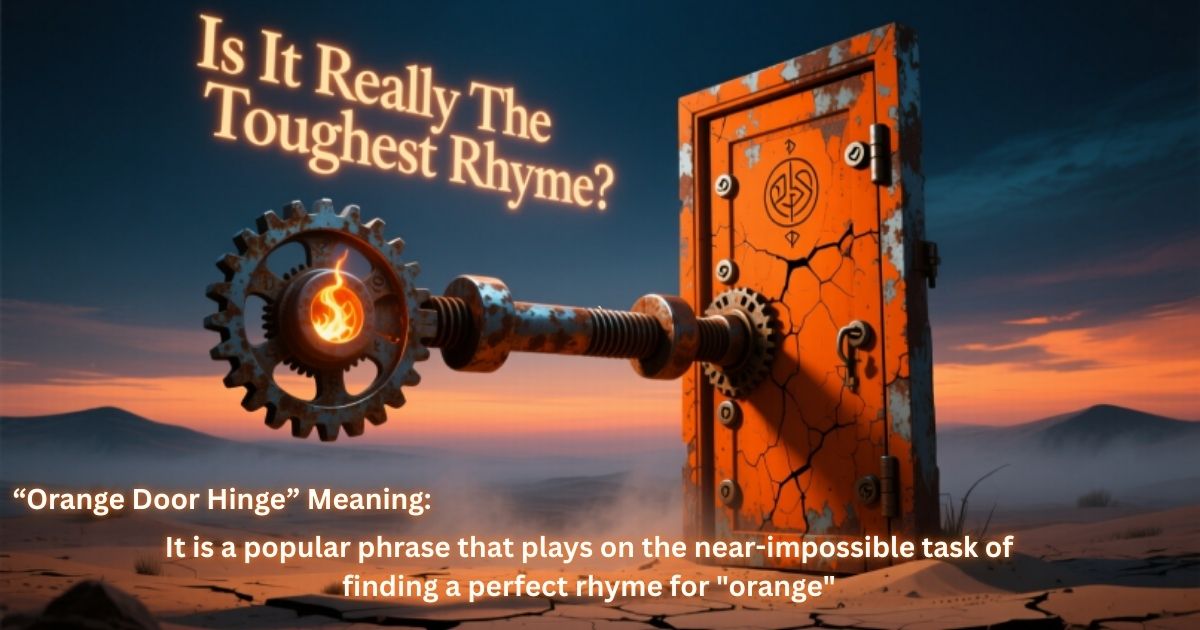
For years, people believed nothing could rhyme with orange, until clever wordsmiths discovered “orange door hinge.” This phrase became a viral sensation, sparking debates among poets, rappers, and language lovers about creative wordplay and pronunciation bending in English.
The orange door hinge phenomenon showcases how phonetic similarity and slant rhyme techniques can solve seemingly impossible rhyme challenges. From Eminem rhymes to Strands word game puzzles, this linguistic curiosity has become a beloved pop culture reference celebrating language creativity and inventive thinking.
Orange Door Hinge Meaning: What Does It Really Mean?
Orange door hinge refers to a near rhyme solution for the word “orange,” which traditionally has no perfect English rhyme. When pronounced creatively with stress patterns adjusted, “door hinge” sounds remarkably similar to “orange.”
This clever slant rhyme example demonstrates how poets and lyricists bend pronunciation rules to create unexpected sound patterns. It’s become essential language trivia showcasing the creativity in English language and how phonetic awareness unlocks new possibilities in wordplay.
Read Also This: https://celebsname.com/jalen-hurts-fantasy-names/
The Story Behind the Orange Door Hinge Meaning
The phrase gained mainstream attention when Eminem famously demonstrated it during his 60 Minutes interview with Anderson Cooper. The Detroit rapper showcased his multisyllabic rhyme mastery by proving that “orange” could indeed rhyme through clever pronunciation bending.
Before this moment, “what rhymes with orange” was considered an unanswerable question in language creativity circles. Eminem’s revelation sparked widespread discussion about hip-hop rhyming techniques and how rap battles and lyricism push linguistic boundaries through inventive phonetics in language.
Orange Door Hinge Eminem

During his iconic television appearance, Eminem challenged the “nothing rhymes with orange” myth by demonstrating his signature phonetic similarity technique. He explained how strategic stress patterns and syllable emphasis make “door hinge” sound like “orange.”
This moment became legendary in hip-hop culture, highlighting how poets and lyricists in rap music constantly innovate with sound patterns. Eminem’s explanation revealed the technical brilliance behind his multisyllabic rhyme schemes that define his lyrical genius.
Orange Door Hinge Strands
The New York Times Strands puzzle featured “orange door hinge” as a challenging wordplay challenge, introducing mainstream audiences to this linguistic curiosity. The game requires players to identify connections between words through creative wordplay and pattern recognition.
This puzzle sparked renewed interest in the rhyme orange door hinge debate, with players discussing slant rhyme techniques and phonetics in language. It transformed an obscure rap technique into accessible internet culture, making language trivia entertaining for everyday word enthusiasts.
Orange Door Hinge Rhyme
The orange door hinge rhyme works through near rhyme mechanics, where similar, not identical, sounds create rhyming effects. By emphasizing specific syllables and adjusting pronunciation, “door hinge” achieves remarkable phonetic similarity with “orange.”
| Aspect | Orange | Door Hinge |
| Syllable Count | 2 syllables | 2 syllables |
| Ending Sound | -inj | -inj (when compressed) |
| Vowel Pattern | or-inj | or-inj (with adjustment) |
| Rhyme Type | N/A | Slant rhyme |
This technique exemplifies creative wordplay used extensively in rap battles and lyricism, where hip-hop rhyming demands constant innovation beyond perfect rhymes.
Orange Hinge Door Meme
The phrase evolved into a viral sensation within meme culture, with countless variations appearing across social media platforms. The orange door hinge meme typically features humorous takes on impossible rhyme solutions and linguistic curiosity.
These memes celebrate language creativity while poking fun at overly confident claims about English rhyming rules. The pop culture reference has become shorthand for thinking outside conventional boundaries, encouraging wordplay challenge enthusiasts to explore pronunciation bending techniques.
Popular meme formats include:
- Side-by-side comparisons of “orange” pronunciation with everyday phrases
- Exaggerated phonetic spellings demonstrating sound patterns
- Humorous “mind-blown” reactions to discovering the rhyme
- References to Eminem as the ultimate rhyme authority
- Jokes about English language inconsistencies and phonetics in language
Orange door hinge rhyme lyrics
Various artists have incorporated this slant rhyme example into their verses, demonstrating multisyllabic rhyme techniques. Eminem famously rapped lines using “orange” paired with “door hinge” and “four-inch,” showcasing masterful pronunciation bending abilities.
Hip-hop rhyming enthusiasts study these lyrics to understand how stressed vowel manipulation creates unexpected connections. The technique has influenced countless rap battles and lyricism, proving that creative wordplay can overcome supposed impossible rhyme scenarios in English.
Orange door hinge meaning is it really the toughest rhyme lyrics
The phrase “is it really the toughest rhyme” questions whether “orange” deserves its reputation as unrhymable. Through near rhyme techniques and phonetic awareness, artists prove that language creativity can solve any wordplay challenge with sufficient skill.
Contemporary poets and lyricists continue exploring this concept, pushing pronunciation boundaries in experimental verses. The debate highlights ongoing tensions between traditional rhyming rules and innovative hip-hop techniques that prioritize phonetic similarity over perfect matches.
Orange door hinge meaning origin

The concept originated from rap music culture, where multisyllabic rhyme schemes required inventive solutions to challenging words. Before becoming mainstream language trivia, underground hip-hop rhyming pioneers experimented with stress patterns to create unconventional matches.
Eminem’s public demonstration simply revealed techniques poets and lyricists had used privately for years. His explanation transformed insider knowledge into accessible internet culture, making phonetics in language fascinating to audiences beyond rap battles and lyricism communities.
Orange door hinge rhyme meaning
At its core, the rhyme meaning represents linguistic flexibility and creativity in English language. It demonstrates that seemingly fixed rules about sound patterns can bend through clever pronunciation adjustments and phonetic awareness.
This slant rhyme serves as powerful evidence that “what rhymes with orange” has answers when approached with creative wordplay. The meaning extends beyond linguistics into philosophy: limitations often exist only until someone thinks differently about the problem.
Orange door hinge Strands meaning
Within the Strands word game context, this phrase teaches players about near rhyme recognition and phonetic similarity patterns. The puzzle challenges conventional thinking about word relationships, encouraging exploration beyond obvious connections.
The New York Times Strands inclusion legitimized this pop culture reference as worthy educational content. It demonstrates how wordplay challenge games can teach complex linguistics concepts while remaining entertaining, bridging academic language creativity with mainstream meme culture.
Key Differences: Perfect Rhyme vs. Slant Rhyme
| Type | Definition | Example | Usage |
| Perfect Rhyme | Identical ending sounds | Cat / Hat | Traditional poetry |
| Near Rhyme | Similar but not identical sounds | Orange / Door hinge | Hip-hop rhyming |
| Slant Rhyme | Partial sound correspondence | Month / Dunce | Modern rap music |
| Assonance | Matching vowel sounds only | Lake / Fade | Creative wordplay |
Why This Rhyme Matters to Language Lovers
The orange door hinge debate reveals fascinating insights about phonetics in language and human language creativity. It proves that English, despite appearing rigid, allows tremendous flexibility for poets and lyricists willing to experiment with pronunciation bending.
Key linguistic concepts demonstrated:
- Stressed vowel positioning affects perceived rhyming
- Sound patterns matter more than spelling in oral traditions
- Multisyllabic rhyme creates richer, more complex verses
- Phonetic awareness unlocks creative possibilities
- Slant rhyme techniques expand expressive range
This linguistic curiosity has educational value beyond entertainment, teaching how stress patterns and pronunciation variations create meaning. Teachers now use this pop culture reference to make phonetics in language engaging for students resistant to traditional grammar lessons.
The Cultural Impact of Creative Rhyming
Eminem’s demonstration transformed an obscure hip-hop rhyming technique into mainstream conversation. The 60 Minutes interview moment became one of the most-watched clips discussing language trivia, reaching audiences who typically ignore linguistics content.
This crossover success highlights how rap battles and lyricism have influenced broader language evolution. Hip-hop culture’s emphasis on creative wordplay and multisyllabic rhyme schemes has enriched English poetry, pushing poets and lyricists across genres to experiment beyond traditional constraints.
The orange door hinge meme phenomenon demonstrates internet culture’s power to spread linguistic knowledge virally. Complex concepts about near rhyme and phonetic similarity reached millions through humorous, accessible formats that made language creativity feel approachable rather than academic.
Practical Applications in Modern Writing
Understanding slant rhyme example techniques benefits anyone working with language professionally. Songwriters, advertising copywriters, and content creators use pronunciation bending to create memorable phrases that stick in audience minds through clever sound patterns.
Practical benefits include:
- Enhanced lyrical flexibility in songwriting and poetry
- Memorable branding through phonetically pleasing company names
- Improved rap battles performance through expanded rhyming vocabulary
- Creative problem-solving when perfect rhymes seem impossible
- Deeper appreciation for phonetics in language complexities
The wordplay challenge aspect also benefits cognitive development. Practicing near rhyme identification strengthens phonological awareness, improving overall language processing abilities. These skills transfer to reading comprehension, foreign language acquisition, and verbal communication effectiveness.
Beyond Orange: Other “Impossible” Rhymes Solved

The success of solving “what rhymes with orange” inspired exploration of other supposedly unrhymable words. Poets and lyricists have discovered slant rhyme solutions for “silver” (filter), “purple” (curple), and “month” (dunce/hunts) through similar pronunciation manipulation.
| “Unrhymable” Word | Creative Rhyme Solution | Technique Used |
| Orange | Door hinge | Multisyllabic compression |
| Silver | Filter | Stressed vowel adjustment |
| Purple | Curple (horse’s rear) | Archaic vocabulary |
| Month | Dunce / Hunts | Near rhyme with consonant shift |
| Ninth | Labyrinth | Extended pronunciation bending |
This exploration demonstrates that creativity in English language can overcome apparent limitations. The linguistic curiosity driving these discoveries enriches language creativity while proving that supposed rules often have creative exceptions waiting for discovery.
The Role of Regional Accents and Pronunciation
Phonetics in language vary significantly across English-speaking regions, affecting rhyme orange door hinge debate perspectives. Some accents naturally pronounce “orange” closer to “door hinge” without deliberate pronunciation bending, making the rhyme feel more natural.
British, Australian, and various American regional accents demonstrate different stress patterns that alter phonetic similarity perceptions. This variation highlights how sound patterns depend partly on speaker and listener backgrounds, making rhyming more subjective than traditional poetry rules suggest.
Hip-hop artists often leverage their regional pronunciation characteristics as signature stylistic elements. This approach transforms accent differences from communication barriers into creative assets, further demonstrating how language creativity benefits from diversity rather than standardization.
Educational Value in Classrooms
Teachers increasingly use the orange door hinge example to engage students with phonetics in language concepts. The pop culture reference connection to Eminem makes linguistics appealing to students who might otherwise find grammar lessons boring.
Classroom applications include:
- Teaching sound patterns through familiar meme culture examples
- Exploring stressed vowel concepts with hands-on pronunciation exercises
- Analyzing rap battles and lyricism to understand multisyllabic rhyme structure
- Comparing perfect rhyme versus near rhyme effectiveness in different contexts
- Encouraging creative wordplay through student-generated slant rhyme challenges
This language trivia approach transforms abstract linguistic concepts into tangible, enjoyable learning experiences. Students develop phonetic awareness while exploring hip-hop rhyming techniques, creating interdisciplinary connections between language arts and contemporary culture.
The Internet’s Role in Spreading Linguistic Innovation
Internet culture accelerated the orange door hinge phrase’s journey from underground rap music technique to universal language creativity knowledge. Social media platforms enabled rapid sharing of Eminem’s demonstration, creating millions of conversations about pronunciation bending techniques.
Meme culture formats made complex linguistics concepts digestible and shareable. The wordplay challenge aspect encouraged participatory culture, with users creating variations and extensions that kept the conversation evolving beyond the original 60 Minutes interview moment.
This democratization of language trivia knowledge represents a significant shift in how linguistic curiosity spreads. Previously confined to academic circles or specialized communities like poets and lyricists, these concepts now reach global audiences instantly through viral pop culture reference mechanisms.
Read Also This: https://celebsname.com/kool-aid-mckinstrys-real-name/
Frequently Asked Questions
What does “Orange Door Hinge” mean in rap?
It’s a playful phrase showing how “orange” supposedly has no perfect rhyme, so rappers use near-rhymes like “door hinge.”
Is “Orange” impossible to rhyme?
Not completely, there are close rhymes like door hinge, foreign, and porridge, but they’re imperfect.
Why do people say “orange” is the hardest word to rhyme?
Because there’s no exact, single-word perfect rhyme in English.
How does Eminem use “orange door hinge”?
Eminem uses it as a slant rhyme to show creative rhyming skills in rap.
Are there real words that rhyme with orange?
There are near-rhymes but no exact matches in standard English vocabulary.
What is a slant rhyme with orange?
A slant rhyme almost matches the sound, like “sporange” or “door hinge.”
Why is “orange door hinge” funny on the internet?
It became a meme highlighting clever but silly attempts to rhyme orange.
Does “orange door hinge” have a deeper meaning?
Not really, it’s mostly used as a creative rhyme challenge.
Can poets rhyme orange successfully?
Yes, using multi-word phrases or creative pronunciation.
What are examples of phrases that rhyme with orange?
Foreign exchange, four-inch, and door hinge are common near-rhyme phrases.
Conclusion
The orange door hinge phenomenon perfectly illustrates how creative wordplay and pronunciation bending can solve supposedly impossible rhyme challenges. Through slant rhyme techniques and phonetic similarity awareness, poets and lyricists continue proving that language creativity knows no true limits in expression.
From Eminem’s legendary demonstration to Strands word game puzzles and viral meme culture, this phrase has become essential language trivia. It celebrates hip-hop rhyming innovation while teaching valuable phonetics in language lessons, proving that multisyllabic rhyme mastery and near rhyme understanding enrich communication for everyone.

Hi, I’m Dome — the face behind CelebsName, your daily source for real celebrity facts, names, and stories.