

Language holds fascinating secrets that shape how we communicate daily. Words with multiple meanings, known as polysemy, add depth and richness to conversations, making language both beautiful and occasionally confusing. These polysemous words create layers of understanding that depend entirely on context and tone.
Ever wondered why context clues matter so much? The same word can express completely different ideas, triggering varied emotional expression and hidden meanings. Understanding this linguistic depth enhances your vocabulary development and transforms ordinary verbal communication into something magical and memorable.
Understanding Words With Multiple Meanings: The Basics
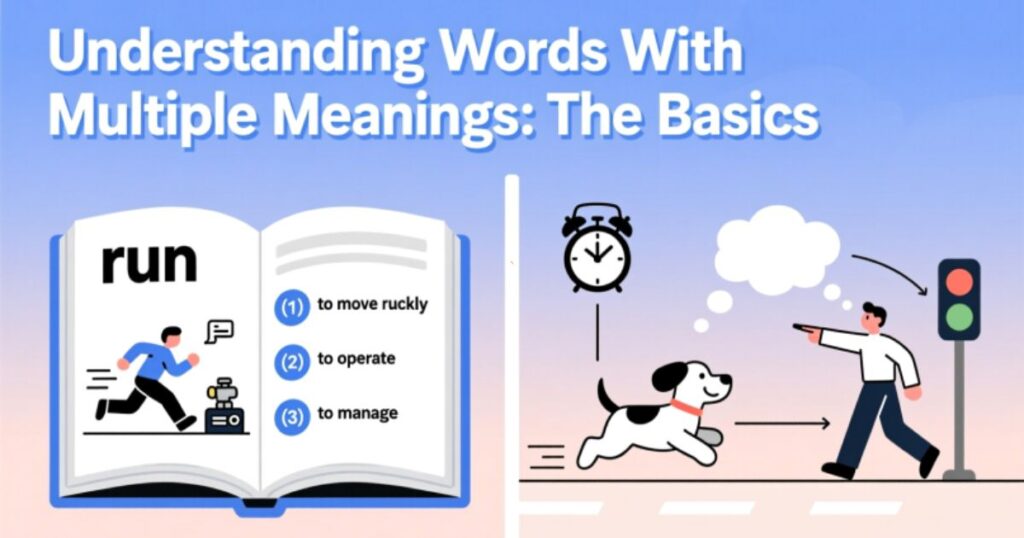
Polysemy refers to single words carrying multiple distinct meanings. This language nuance isn’t accidental, it evolved naturally as human communication expanded. The word “bark” illustrates this perfectly: tree covering, dog sound, or speaking harshly.
Semantic interpretation depends heavily on surrounding context. Without proper context clues, confusion emerges quickly. Learning to recognize these patterns strengthens your communication clarity and reduces misunderstandings in conversation, making you a more effective communicator overall.
Read Also This: https://celebsname.com/stores-open-on-thanksgiving/
How Context Reveals the True Meaning of Words
Context-driven meaning acts as your decoder for understanding ambiguity in language. The sentence structure, surrounding words, and situation all provide essential clues. Consider “light”, it means illumination, weight, or color depending entirely on usage.
Your brain processes these context clues automatically during daily conversations. This natural semantic interpretation happens instantly, though sometimes fails spectacularly. Paying attention to tone, setting, and subject matter dramatically improves communication clarity and prevents embarrassing mix-ups.
Common Words With Multiple Meanings You Use Daily

Everyday usage includes countless polysemous words you never notice. “Right” means correct, direction, privilege, or immediately. “Spring” indicates season, jump, water source, or coiled metal. “Watch” suggests timepiece, observe, or guard duty, all completely different concepts.
“Match” demonstrates remarkable versatility: competition, romantic pairing, fire-starter, or equality. “Crane” refers to birds, construction equipment, or neck-stretching movements. These examples showcase how wordplay naturally enriches expressive writing and creative communication without conscious effort.
Emotional Impact of Words With Multiple Meanings
Double meanings create powerful emotional expression in personal interactions. Saying “I’m feeling light today” could mean happy, unburdened, or physically lighter. This linguistic depth allows subtle emotional impact that single-meaning words cannot achieve.
Romantic expression particularly benefits from poetic language featuring ambiguity in language. Phrases carrying hidden meanings let people communicate feelings indirectly, creating intimacy and connection. This conversation charm makes interactions more memorable and emotionally resonant.
How Words With Multiple Meanings Spice Up Conversations

Playful conversations thrive on clever wordplay and intentional double meanings. Puns rely entirely on polysemy, creating humor through unexpected semantic interpretation. This conversation charm makes discussions engaging rather than monotonous, adding personality to verbal communication.
Creative communication uses ambiguity in language strategically for entertainment. Comedians, writers, and everyday conversationalists leverage polysemous words to create surprise, delight, and storytelling enhancement. This technique transforms basic exchanges into memorable communication enhancement experiences.
Misunderstandings That Arise From Words With Multiple Meanings
Misunderstandings in conversation frequently stem from unclear context clues. When someone says “the project is pretty light,” do they mean easy, pale-colored, or not serious? Without proper context and tone, confusion replaces communication clarity.
These mix-ups highlight why semantic interpretation matters tremendously. Workplace emails, text messages, and cross-cultural exchanges particularly suffer from ambiguity in language. Developing awareness of polysemy helps you anticipate potential confusion and communicate more precisely.
Words With Multiple Meanings in Literature and Poetry

Literature and poetry deliberately exploit polysemous words for artistic effect. Shakespeare masterfully employed double meanings to create layers of interpretation. Poetic language thrives on this linguistic depth, allowing readers to discover new meanings with each reading.
Storytelling enhancement comes from carefully chosen words with multiple meanings. Authors craft sentences where hidden meanings reward attentive readers. This expressive writing technique creates richer narratives that resonate emotionally and intellectually, demonstrating true language beauty.
Tips to Master Words With Multiple Meanings Effortlessly
Vocabulary development accelerates when you actively notice context-driven meaning in reading materials. Pay attention to how authors use context clues to clarify intent. Practice identifying which meaning applies in different situations.
Communication improvement requires conscious practice with polysemous words. Create sentences using words like “play,” “spring,” or “watch” in various contexts. This learning tips approach builds intuitive understanding of language nuance naturally.
Fun Games to Explore Words With Multiple Meanings
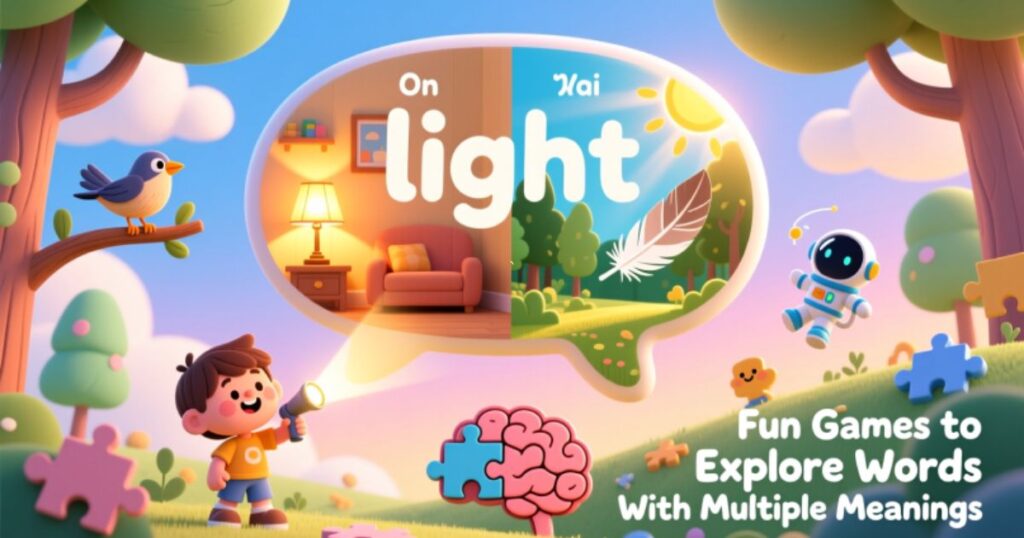
Playing wordplay games strengthens vocabulary development enjoyably. Try creating puns using “bark,” “crane,” or “match.” Challenge friends to guess which meaning you intend, turning communication enhancement into entertainment.
Creative communication exercises include writing short stories featuring maximum double meanings. Make lists of polysemous words and explore every possible context. These activities develop linguistic depth while keeping everyday usage practice engaging and memorable.
Why Words With Multiple Meanings Make Language Beautiful
Language beauty emerges from flexibility and adaptability. Polysemy allows efficient communication, one word serves multiple purposes rather than requiring separate vocabulary. This economy creates elegance in expressive writing and verbal communication.
The poetic language becomes possible precisely because words with multiple meanings exist. This linguistic depth enables metaphor, symbolism, and layered storytelling. Without ambiguity in language, communication would become mechanical, losing its artistic and emotional expression potential completely.
Exercises to Improve Your Understanding of Multiple-Meaning Words
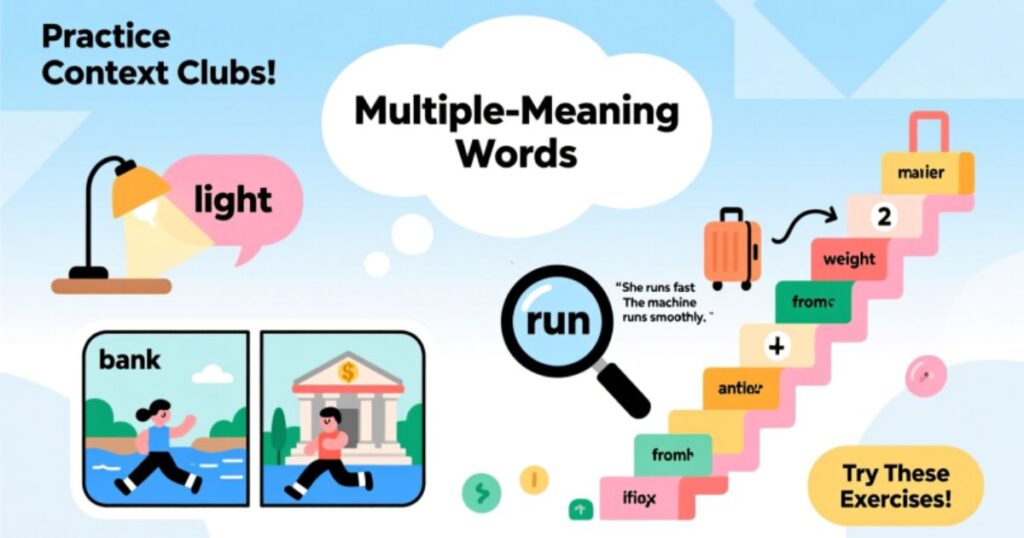
Vocabulary development exercises should target context clues recognition. Read paragraphs and identify polysemous words, then determine which meanings apply. This strengthens semantic interpretation skills systematically and builds communication clarity over time.
Create flashcards listing words with multiple meanings examples. Write different sentences for each definition. Practice explaining context-driven meaning to others. These learning tips transform passive knowledge into active communication enhancement abilities.
Words With Multiple Meanings: Annoying but Also Pretty Funny
Ambiguity in language frustrates when causing misunderstandings in conversation, yet provides endless humor. Auto-correct fails and misheard phrases create hilarious situations. This duality makes polysemy simultaneously challenging and entertaining.
Wordplay comedy depends entirely on exploiting double meanings. The same hidden meanings that confuse also delight when used intentionally. Embracing both aspects enhances conversation charm and helps maintain patience when confusion strikes.
The Importance of Context When Using Multiple-Meaning Words
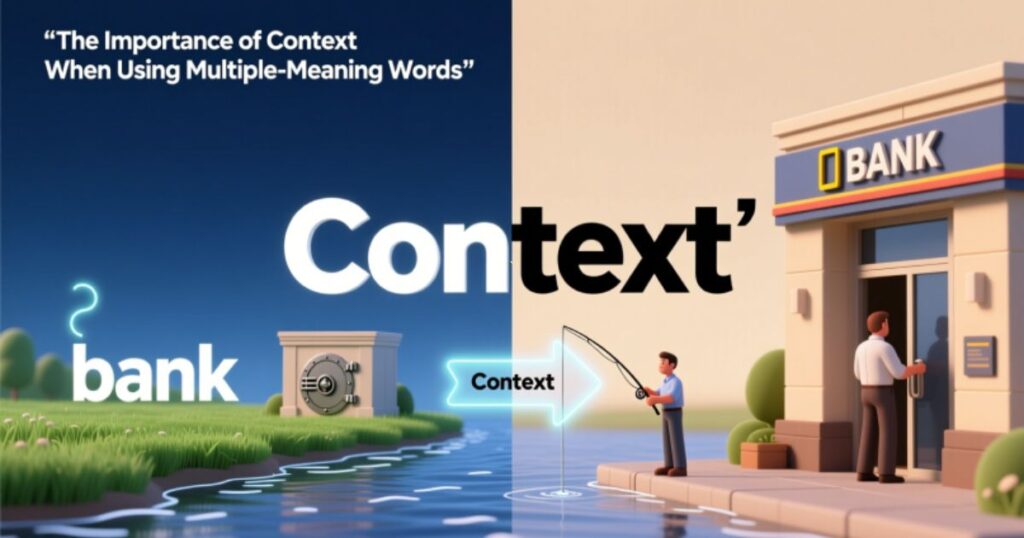
Context and tone determine everything in semantic interpretation. Without situational awareness, even simple sentences become incomprehensible. “I saw her duck” means either observing a bird or witnessing someone dodging.
Communication clarity demands attention to surroundings, audience, and subject matter. Professional settings require more precision than casual daily conversations. Mastering context clues separates effective communicators from those frequently misunderstood, improving overall communication improvement dramatically.
Words With Multiple Meanings Examples
Here’s a comprehensive table showing polysemous words in action:
| Word | Meaning 1 | Meaning 2 | Meaning 3 |
| Light | Illumination | Not heavy | Pale color |
| Play | Performance | Engage in game | Manipulate |
| Spring | Season | Jump | Water source |
| Watch | Timepiece | Observe | Stand guard |
| Match | Fire-starter | Sports game | Compatible pair |
| Bark | Tree covering | Dog sound | Speak harshly |
| Right | Correct | Direction | Legal privilege |
| Crane | Bird | Construction machine | Stretch neck |
These examples demonstrate context-driven meaning perfectly. Each word requires context clues for proper semantic interpretation in everyday usage.
Words With 3 Meanings
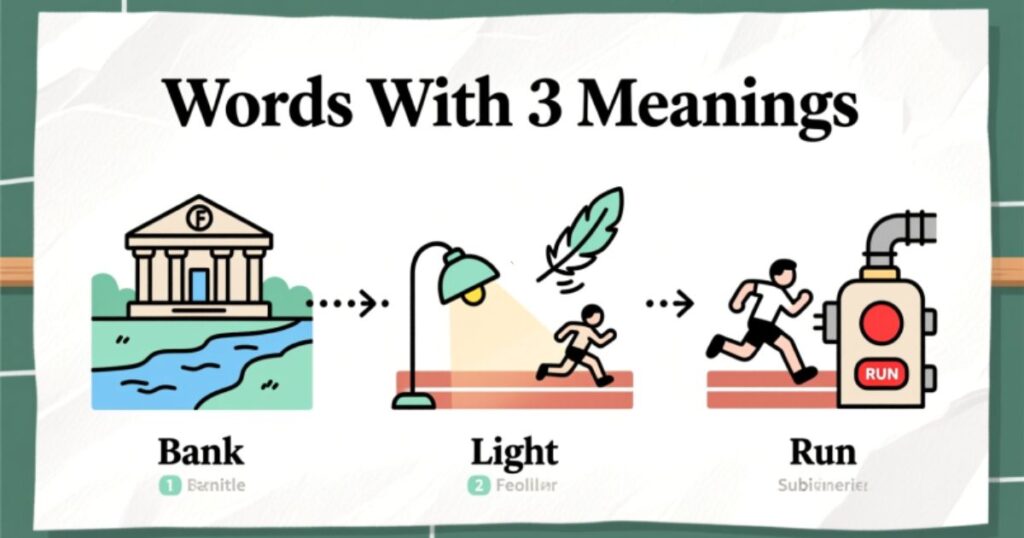
Many polysemous words carry exactly three distinct definitions, creating rich linguistic depth:
- Bat: Flying mammal, sports equipment, batting action
- Bank: Financial institution, river edge, rely upon
- Fair: Just/reasonable, carnival, light-colored
- Foot: Body part, measurement unit, bottom position
- Kind: Gentle nature, type/category, somewhat
- Lean: Thin, tilt, depend on
- Left: Direction, departed, remaining
- Mean: Signify, unkind, average
- Mine: Belonging to me, excavation site, explosive device
- Park: Green space, vehicle placement, parking lot
- Ring: Circular object, sound, boxing area
- Rock: Stone, musical genre, sway motion
Each demonstrates how language nuance creates communication possibilities. Understanding these hidden meanings improves vocabulary development and expressive writing significantly.
50 Words With Multiple Meanings
Below is an extensive list showcasing polysemy across everyday usage:
| Words | Words | Words | Words | Words |
| Address | Band | Bowl | Can | Date |
| Duck | Engage | Fair | Fast | Fine |
| Fly | Ground | Jam | Kind | Last |
| Lean | Left | Letter | Light | Like |
| Match | Mean | Mine | Nail | Palm |
| Park | Pitcher | Plant | Play | Point |
| Pound | Present | Pupil | Right | Ring |
| Rose | Row | Scale | Seal | Season |
| Sink | Spell | Spring | Stalk | Star |
| Suit | Tire | Trip | Trunk | Type |
| Wave | Well | Yard | Bark | Bat |
| Bear | Bill | Bolt | Cabinet | Cape |
| Change | Chair | Chest | Club | Crane |
These polysemous words appear constantly in daily conversations, requiring context and tone for accurate understanding and communication clarity.
Controversial Words With Multiple Meanings
Some words with multiple meanings carry sensitive or controversial connotations depending on context. Words like “gay” transformed from meaning happy to referring to sexual orientation. Semantic interpretation must consider historical and cultural context clues.
Ambiguity in language around controversial terms demands extra sensitivity. Words like “discriminate” can mean discernment or prejudice. Understanding these nuances prevents misunderstandings in conversation and demonstrates communication improvement awareness. Context-driven meaning becomes absolutely critical when navigating potentially offensive territory.
Read Also This: https://celebsname.com/feet-names/
Frequently Asked Questions
What is a hidden meaning of common English words?
Some words have multiple interpretations depending on context, making language richer and sometimes confusing.
How can a single word have different meanings?
Words evolve over time and adopt new meanings through culture, slang, and usage.
What are examples of homonyms with hidden meanings?
Words like “bat,” “seal,” and “bank” have meanings that change with context.
Why do some words mean the opposite in different situations?
Context and tone determine whether a word is taken literally or figuratively.
How do hidden meanings make language interesting?
They allow playful communication, puns, and deeper interpretations of sentences.
What word meanings are commonly misunderstood?
Words like “literally” or “unique” are often misused, altering their intended meaning.
Can hidden meanings cause communication problems?
Yes, unclear context can lead to misunderstandings in everyday speech.
How do I identify words with multiple meanings?
Look at surrounding words, speaker intent, and the situation to decode the meaning.
Why do dictionaries list so many definitions for one word?
Language reflects real-world usage, so definitions grow as new meanings emerge.
How can I learn more hidden word meanings?
Reading more and paying attention to context helps uncover layered vocabulary.
Conclusion
Words with multiple meanings transform language from simple information exchange into artistic creative communication. This polysemy provides the flexibility that makes human language uniquely expressive. Understanding context clues and language nuance empowers you to communicate with clarity while appreciating linguistic depth and language beauty fully.
Mastering polysemous words enhances every aspect of verbal communication, from daily conversations to literature and poetry. By recognizing hidden meanings and practicing context-driven meaning interpretation, you unlock richer emotional expression and avoid misunderstandings in conversation. Embrace this fascinating aspect of language, it’s what makes communication truly magical and memorable.

Hi, I’m Dome — the face behind CelebsName, your daily source for real celebrity facts, names, and stories.